
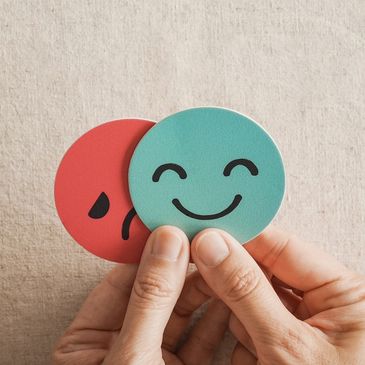
Young People: Feeling Stuck in the Middle?
Identifying and Understanding Coercive Dynamics
Identifying and Understanding Coercive Dynamics
Sometimes family issues, whether your parents are together or separated, can make you feel like you have to choose sides. If you're confused, uncomfortable, or feeling pressure to act a certain way, you're not alone. Click here to find supportive tips and critically think about what's really going on.

Identifying and Understanding Coercive Dynamics
Identifying and Understanding Coercive Dynamics
Identifying and Understanding Coercive Dynamics
When a child becomes increasingly distant from, fearful of or rejecting towards a parent or family member who has been safe, the reasons may be more complex than they first appear. Coercive pressure, loyalty conflicts, repeated negative messaging and interference with important relationships can influence how a child thinks, feels and responds.

Coercive Tactics That Undermine Connection
Identifying and Understanding Coercive Dynamics
Coercive Tactics That Undermine Connection
When a child is gradually turned against a safe parent or family member, it often isn’t due to a single event, it’s the result of repeated, coercive tactics that distort perception and erode emotional bonds. Understanding these tactics is the first step in protecting the child’s right to safe, loving relationships.

Our Petition on Change.org
Identifying and Understanding Coercive Dynamics
Coercive Tactics That Undermine Connection
PETITION
Support stronger legal recognition of child coercive control and alienating behaviours in Australia. The petition calls for these behaviours to be recognised and addressed within post-separation family violence, with clearer legislative protections for children and the safe relationships that coercive control can disrupt.
We are a Self-Funded Organisation
Our work is made possible through the generosity of people like you. We do not receive government funding and rely entirely on donations to continue supporting families, raising awareness, and driving change.
All donations are tax-deductible in Australia.


Every day in a hundred small ways, our children ask: ‘Do you see me? Do you hear me? Do I matter?’ Their behavior often reflects our response.
— L. R. Knost
We are proud to be supported by:
Interested in supporting us? Contact us via Facebook.


Please Sign Our Petition
We are calling for Australian law to recognise and respond to child coercive control and alienating behaviours as serious forms of psychological abuse and family violence, particularly where children are manipulated into rejecting safe relationships or where legal and protective systems are misused to intensify that harm.